Cat care
How much water should a cat drink a day?
How much water a cat needs per kg each day, how wet and dry food change it, how to measure it and when drinking a lot is a reason to see your vet.
Veterinary nutrition specialists put a healthy adult cat's total water need at about 50 ml per kg of body weight a day, so roughly 200 ml for a 4 kg cat. That total includes the water in food. A cat on wet food may hardly touch its bowl, while a cat on dry food has to drink most of its water. What matters most is your own cat's normal: if it starts drinking a lot more than usual, see your vet.
The guide figure
| Body weight | Total water a day, from food and drink |
|---|---|
| 3 kg | about 150 ml |
| 4 kg | about 200 ml |
| 5 kg | about 250 ml |
| 6 kg | about 300 ml |
This is a rough guide, not a target to hit. Cats vary, and the figure covers everything your cat takes in, not just what it laps from a bowl. Your vet can tell you what is normal for your cat, especially for a kitten, an older cat or a cat with a medical condition.
Wet food, dry food and the bowl
Food changes how much your cat drinks more than anything else. Cats Protection and International Cat Care both say wet cat food is about 70 to 80% water. Dry food contains at most about 10% moisture, so a cat on dry food has to drink most of its water from a bowl or fountain.
That is why the PDSA says it is quite common to see a cat drink only now and again: cats get most of their fluid from their food, especially if they mainly eat wet food. International Cat Care adds that many cats prefer to drink in private or outdoors, and that not seeing your cat drink is not a concern if nothing has changed and your cat is well.
Veterinary nutritionists also note that most studies find cats fed only dry food take in less water overall, even though they drink more from the bowl. If you want to add wet food, speak to your vet first and change over gradually, mixing the new food with the old. International Cat Care points out that wet food can contain fewer calories than dry, so keep an eye on your cat's weight.
How to measure what your cat drinks
The PDSA and International Cat Care both suggest measuring over 24 hours. A written figure is far more useful to your vet than "a lot".
- Measure water into the bowl with a measuring jug, filling it to the brim, and note the amount.
- Note any top-ups during the day.
- After exactly 24 hours, pour what is left back into the jug.
- Take what is left away from everything you put in. That is what your cat drank.
- Divide by your cat's weight in kg to get ml per kg.
A fountain holds water in its pump and filter, so a plain bowl is easier for a measuring day. If your cat only drinks from its fountain, measure the water in and empty the fountain completely at the end. If other pets share the water, the figure covers all of them, so tell your vet.
Cat drinking a lot of water: when to see your vet
International Cat Care defines drinking too much (polydipsia) as more than 100 ml per kg of body weight a day, which is over 400 ml for a 4 kg cat. It also says that any cat drinking more than usual should be seen by a vet, and a UK specialist vet referral practice notes that some pets drink noticeably more while still under that figure. So watch for change, not just the number.
The PDSA lists these signs to look out for:
- being thirsty all the time
- the water bowl emptying faster than usual
- drinking from places your cat does not normally use, such as taps, sinks, the bath or the toilet
- drinking so much that it vomits
- visiting the litter tray more often, or passing more urine
- weeing in the house
The most common causes the PDSA names include a urine infection, kidney disease, diabetes, hyperthyroidism (an overactive thyroid), a high temperature and some medicines, such as steroids. International Cat Care adds that weight loss, a bigger appetite or changes in behaviour can come with it. Only your vet can find the cause, usually with blood and urine tests. Book an appointment and take your 24 hour figure and, if you can, a urine sample. The PDSA is clear on one point: never withhold water from your cat.
Signs your cat may not be drinking enough
Too little water is a vet matter too. Dr Sarah Manning of the Texas A&M College of Veterinary Medicine describes two checks: the gums, which should feel moist rather than very sticky, and a gentle skin tent at the back of the neck, which should drop straight back down in a well-hydrated animal. A dehydrated pet may also be less active and not want to eat or drink.
If you are worried, call your vet. International Cat Care warns against forcing water into a cat with a syringe: it is very stressful and can cause illness if water enters the lungs. Your vet can give fluids safely if they are needed.
How to help your cat drink more
International Cat Care and Cats Protection give similar tips. Change one thing at a time, because cats dislike sudden changes.
- Fresh water every day. Empty, wash and refill bowls daily rather than topping them up.
- Wide, shallow bowls filled to the brim. Most cats prefer their whiskers not to touch the sides. Glass or ceramic suits many cats, and International Cat Care notes that metal bowls can be noisy, cold and reflective.
- Several water stations. At least one bowl per cat plus one extra, and one on every floor, in quiet spots away from doors and noisy appliances.
- Away from the litter tray, ideally in a different room.
- Near food, but not next to it. International Cat Care suggests water in the same room as food but not right beside it, and advises against double bowls that hold food and water together.
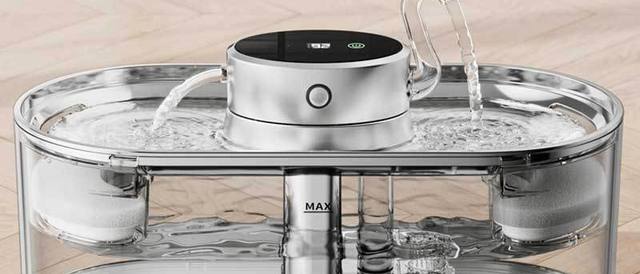
- Moving water. Many cats like running water, which is why some drink from a dripping tap. A fountain gives them moving water in a fixed spot.
- Wet food, if your vet agrees, perhaps with a little warm (not hot) water added.
- Flavoured water, such as water used to poach chicken or fish with no salt or stock, or the liquid from tuna in spring water. Avoid salty liquids like stock or gravy, milk and anything containing onion. Check with your vet first, as not every option suits every cat.
Our guide Do cats need a water fountain? covers bowls and placement in more detail.
Where a fountain fits
A fountain is one option on that list, not a cure, and some cats ignore one. International Cat Care suggests introducing it in stages: put it in place empty and switched off, add water once your cat is relaxed around it, then turn the pump on. A rubber or silicone mat underneath can reduce vibration noise. Keep it topped up, as some fountains get noisier when the water runs low.
Our Wi-Fi cat water fountain holds 2.5 litres, sends app reminders when the water is low and the filter is due, and switches the pump off rather than running dry. Our cordless fountain runs from a 5000 mAh battery with no cable to the drinking area, so you can set up a water station away from a socket, for example on another floor. It has no app, so check the water level and the charge yourself.
Note that our Wi-Fi fountain has a plastic body and the cordless one has a clear tank on a stainless steel base. If your cat prefers glass or ceramic, keep a bowl out as well.
Any fountain needs a weekly clean and regular filter changes: see How to clean a cat water fountain. You can compare both models on our cat water fountains page.
Frequently asked questions
How much water should a cat drink a day?
Veterinary nutritionists give about 50 ml per kg of body weight a day as a guide, so roughly 200 ml for a 4 kg cat. That covers the water in food as well as the bowl, so a cat on wet food drinks much less than that from its bowl.
Why is my cat drinking a lot of water?
There are many possible reasons. The PDSA lists a urine infection, kidney disease, diabetes, an overactive thyroid, a high temperature and some medicines among the most common causes. Book a vet appointment, take a note of how much your cat drinks in 24 hours and never withhold water.
Is it normal for a cat to hardly drink?
It can be. Wet cat food is about 70 to 80% water, so a cat on wet food may get most of its water from meals and drink only now and then. If your cat is well and its habits have not changed, that is not usually a worry. If you think your cat may be dehydrated, call your vet.
How do I measure how much water my cat drinks?
Measure water into a bowl with a jug, note any top-ups, and after exactly 24 hours measure what is left. The difference is what your cat drank. Divide it by your cat's weight in kg to compare it with the guide figure, and share the result with your vet.
How can I get my cat to drink more water?
Offer fresh water every day in wide, shallow bowls, set up several water stations away from the litter tray and not right beside food, try moving water from a fountain, and ask your vet about wet food. Change one thing at a time and watch what your cat prefers.