Cat care
How long can you leave a cat alone? What UK welfare advice says
How long a cat can be left alone, from UK cat charities: adult cats, kittens and older cats, overnight, 2 days away, sitters, catteries and feeders.
Most healthy adult cats are fine alone for a working day, but Cats Protection says around 12 hours is the most you should leave a cat, and only now and then, not as a routine. Kittens, older cats and cats with medical needs should be checked much more often. If you will be away for longer than 12 hours, including a weekend or a 2-day trip, someone needs to look after your cat. This guide sets out what UK welfare charities advise and how to get your home ready.
How long, at a glance
Cats Protection's guidance in brief:
| Your cat | How long it can be left |
|---|---|
| Healthy adult cat | Around 12 hours at most, occasionally, not as a regular routine |
| Young kitten | A few hours at most at a time, with checks at least every few hours until fully grown |
| Older cat, or a cat with medical or other complex needs | Less than 12 hours, with more frequent checks |
| Away more than 12 hours, or for long periods on consecutive days | Arrange a sitter, friend, neighbour or cattery |
These are upper limits for a cat that is well, not targets. Cats Protection notes that cats used to constant company may show separation-related problems and loneliness when you are out. If your cat has a health condition or takes medicine, ask your vet how long it can safely be on its own.
Overnight, weekends and holidays
Advice differs a little on nights. Cats Protection says most cats will be fine left for the day or overnight, within that 12 hour limit. Battersea is stricter: it says it is never advisable to leave a cat completely alone overnight or for the weekend, because your cat could become ill or be injured while you are away, even if a feeding device serves its meals.
So a late night out, home within 12 hours, is usually fine for a healthy adult cat. A night away, where you will be gone longer than that, needs someone to call in.
Can you leave a cat alone for 2 days?
No. Two days is four times the 12 hour guide. Cats Protection advises that if you are away for longer than 12 hours, or for long periods on consecutive days, a cat sitter, friend, family member or neighbour should look after your cat at home, or your cat should go to a cattery. For holidays, the RSPCA's advice is never to leave your pet on its own without a responsible person to care for it.
Your legal duty of care
In England and Wales, section 9 of the Animal Welfare Act 2006 makes it an offence not to take reasonable steps to make sure the needs of an animal you are responsible for are met, to the extent required by good practice. The Act lists those needs as:
- a suitable environment
- a suitable diet
- being able to show normal behaviour
- being housed with, or apart from, other animals
- protection from pain, suffering, injury and disease
Scotland (the Animal Health and Welfare (Scotland) Act 2006) and Northern Ireland (the Welfare of Animals Act (Northern Ireland) 2011) have similar duties. None of these laws gives a number of hours. Leaving a cat for days with no one checking makes the last need on that list hard to meet, because nobody would notice if your cat became ill or injured.
What your cat needs while you are out
Cats Protection's advice for shorter absences covers:
- Food. Wet food spoils after a few hours left out, so only leave what your cat will eat in that time. Dry food keeps longer but still needs replacing at least every 12 hours.
- Water. Leave plenty of fresh water. International Cat Care suggests at least one water bowl per cat plus one extra. A spare bowl also means that a knocked over bowl or a fountain that stops does not leave your cat without water.
- Litter. Scoop the tray before you leave and top the litter up to about 3 cm deep.
- Safety. Put away wires, string toys, human food, medicines, cleaning products, poisonous plants and anything else that could harm your cat.
- Something to do. Leave safe toys without string, a puzzle feeder, hiding places and a high perch or a clear windowsill.
- Exits. Close off escape routes for an indoor cat. For a cat that goes outside, check the cat flap works rather than shutting your cat in. Keep the microchip details up to date: in England, cats must be microchipped by 20 weeks old, a rule that began on 10 June 2024.
Who can look after your cat
Cats Protection calls keeping your cat at home the safest and least unsettling option when you go on holiday. You have three main choices.
A friend, neighbour or family member. Cats Protection suggests someone who can visit at least twice a day to make sure your cat is fed and safe. Very young or old cats, or those with health conditions, may need more frequent visits. Give a spare key to someone you trust as a backup.
A cat sitter. The RSPCA advises meeting a sitter before you book, asking to see their DBS certificate, checking references and checking they have insurance to cover your pet in an emergency. A few introductory visits before you go help your cat get used to them.
A cattery. The RSPCA says catteries should have an up-to-date licence from the local council, and advises visiting before you book and asking how pets are checked during the day and the evening. Cats Protection advises making sure your cat's vaccinations are up to date. Battersea notes that quieter, more nervous cats may feel better in a reputable, secure cattery than with strangers calling at odd times, while some older cats depend on their routines and may find a cattery upsetting.
Whoever looks after your cat, leave them:
- your contact details and an emergency contact
- your vet's details, including the out-of-hours service
- enough food, litter and medication for the whole stay
- written daily care instructions, including feeding times
- where the cat carrier is kept
What feeders, fountains and cameras can and cannot do
Smart pet devices help on long days and between a sitter's visits. They do not replace a person who checks on your cat every day.
| Device | What it can do | What it cannot do |
|---|---|---|
| Automatic feeder | Serve dry food at set times in set portions | Serve wet food, clean the litter tray, notice that your cat is unwell |
| Water fountain | Keep water moving through a filter | Refill or clean itself |
| Camera | Show you your cat live on your phone | Act on anything you see |
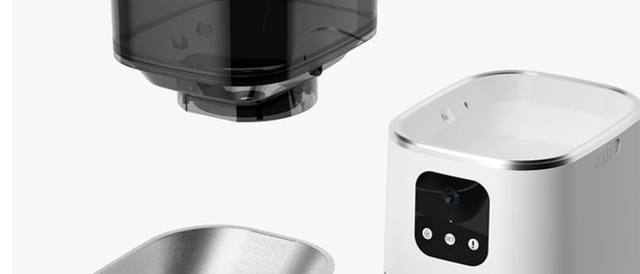
Our Wi-Fi automatic cat feeder holds 6 litres of dry food. You set meal times and portions in an app and can add an extra meal with the Feed button. It runs from a UK plug adapter with a battery compartment as a backup, but batteries are not in the box, so fit them and test a meal with the plug out before you rely on it. Our guide How to choose an automatic cat feeder covers portions and power cuts.
The automatic cat feeder with camera adds live video with night vision, so you can see whether your cat has come to eat. The supplier does not list live two-way talk or say whether clips can be recorded, so treat it as a live view. Pet cameras explained covers placement and privacy.
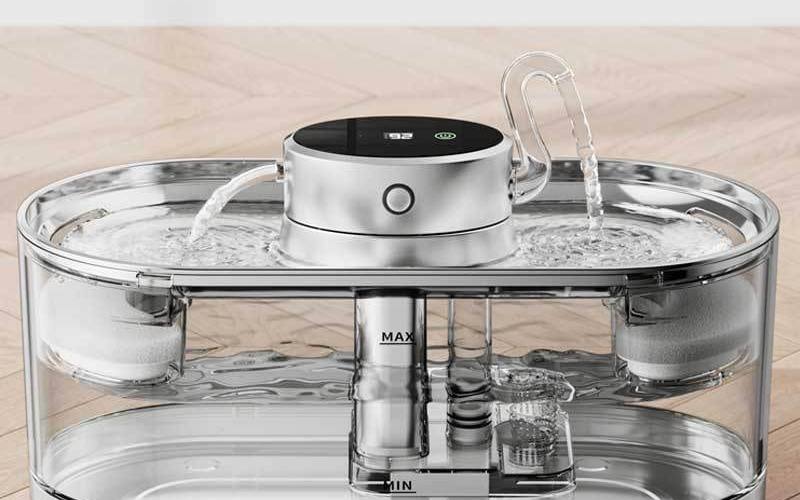
Our cordless water fountain runs from a 5000 mAh rechargeable battery, with no cable to the drinking area. It has no app or low water alert, and the supplier does not give a running time per charge, so it suits daily use with someone checking it, not days on its own.
Alongside a sitter, they work well: the feeder keeps meal times regular, the camera lets you look in between visits, and the sitter sees to water, litter and your cat.
Before you go
- Run a new feeder or fountain for a week while you are at home, so you know it works and your cat uses it.
- Fit fresh batteries in the feeder and charge a cordless fountain.
- Book a sitter or cattery early.
- Ask your vet about any medicine your cat takes and how a carer should give it.
You can compare our models on the automatic cat feeders and cat water fountains pages.
Frequently asked questions
Can I leave my cat alone overnight?
A healthy adult cat can usually manage a night on its own if you are back within about 12 hours. Cats Protection gives around 12 hours as the most you should leave a cat, and only now and then. Battersea advises against leaving a cat completely alone overnight. If you will be gone longer than 12 hours, ask someone to call in.
Can you leave a cat alone for 2 days?
No. UK cat charities advise that if you will be away for longer than about 12 hours, someone needs to look after your cat. Ask a friend, neighbour or cat sitter to visit at least twice a day, or book a licensed cattery. An automatic feeder does not change this.
How long can a kitten be left alone?
Cats Protection says young kittens should be left for a few hours at most at a time, and checked at least every few hours until they are fully grown. If you work long days, plan visits from a friend, neighbour or sitter.
Is an automatic feeder enough if I go away for the weekend?
No. A feeder serves meals, but it cannot refill water, clean the litter tray or notice that your cat is ill or injured. Battersea and the RSPCA both advise against leaving a pet with no one to care for it, feeder or not.
Is it against the law to leave a cat alone?
The law does not set a number of hours. Under the Animal Welfare Act 2006 in England and Wales, and similar laws in Scotland and Northern Ireland, you must take reasonable steps to meet your cat's needs, including protection from pain, injury and disease. Arranging care while you are away is part of that.