Cat beds
What is the best bed for a cat? How to choose one
How to choose a bed your cat will use: what cats look for in a resting place, bed types, size, where to put it, and beds for older cats and multi-cat homes.
Cats are experts at sleeping. Cats Protection says domestic cats sleep for about 12 to 18 hours a day, with kittens and older cats sleeping more. That is a lot of time spent somewhere, and many owners buy a bed only to find their cat prefers the laundry basket. The best bed for a cat is one that matches what cats look for in a resting place. This guide explains what that is and how to choose.
What cats look for in a place to sleep
Cats Protection sums it up in four ideas: cats often prefer to sleep somewhere warm, comfortable, raised up and safe.
- Warm. Cats seek out heat: the sunny windowsill, the airing cupboard, the spot above the radiator. Vets cite a thermoneutral zone for cats of roughly 30 to 38°C, the range in which a cat does not need to spend energy keeping warm. That is well above normal room temperature, which explains a lot.
- Comfortable. Soft, padded and something to lean against.
- Raised up. Cats Protection says cats feel safest when they are somewhere up high.
- Safe. When cats feel stressed they like to hide or get up high. A bed in the path of children, dogs and the hoover is not restful.
A bed that is warm and soft but sits in a busy hallway on a cold floor fails two of the four tests, and your cat will vote with its paws.
Types of cat bed
| Type | Good for | Watch out for |
|---|---|---|
| Oval or round bed with a raised rim | cats that curl up and like to lean | needs a warm spot; wash the plush regularly |
| Covered bed or cave | shy cats and cats that like to hide | some cats will not go into an enclosed space |
| Window or radiator perch | cats that like heat and a view | check the fitting and the weight limit |
| Heated or self-warming pad | older cats, cold rooms | follow the maker's safety instructions for anything electrical |
| Cardboard box with a blanket | trying out a spot cheaply | not washable, replace often |
If you are not sure which type your cat prefers, watch where it sleeps now. A cat that curls up on the sofa arm is a rim-and-lean cat. A cat that disappears under the bed wants a hiding place.
Size
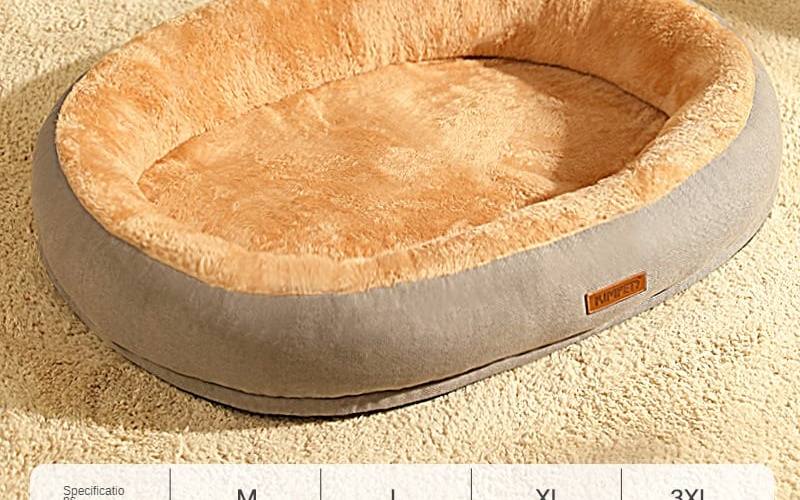
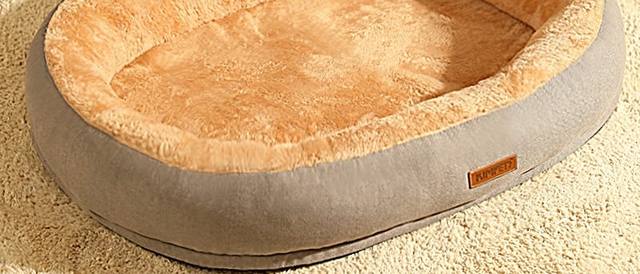
Most adult cats sleep curled into a ball, so they need less space than you might think. A bed of around 60 x 45 cm gives the majority of adult cats room to curl up and turn round. Our plush oval pet bed, 60 x 45 cm is recommended by the supplier for cats and small dogs up to about 7.5 kg, with deep plush sides to lean on and a foam insert in the base.
Large breeds, or cats that like to sleep stretched out on their side, need more length. Measure your cat lying stretched out and compare with the inside of the bed, not the outside: a thick rim takes up space.
Where to put the bed
Where the bed goes matters more than which bed you buy.
- Up off the floor if you can: on a chair, a low shelf or the end of a sofa. A little height makes many cats feel safer.
- Warm and out of draughts, near but not against a radiator, or in a sunny spot.
- Quiet, out of the main walkway and away from noisy appliances.
- Away from the litter tray, food and water. Cats Protection advises keeping the litter tray away from food, water and sleeping areas, as cats prefer to keep all of those separate, and leaving plenty of space between food bowls, water bowls, litter trays and beds.
- Where your cat already sleeps. If your cat has a favourite chair, put the bed on it.
Beds for older cats
Older cats sleep more and can find jumping harder. Cats Protection lists reduced jumping as a common sign of ageing and says senior cats usually prefer sleeping on a soft, well-padded surface. Its advice for older cats includes:
- a soft, well-padded bed in a warm, quiet place,
- more than one sleeping spot around the home,
- ramps or steps up to favourite high places, instead of a big jump.
A bed with a plush rim on a low, stable chair, with a footstool as a step, often suits an older cat better than a high shelf.
Beds in a home with more than one cat
Cats that live together often like to rest apart, even when they get on well. Cats Protection's advice for multi-cat homes is to provide one of each key resource per cat, plus one extra, and it includes sleeping places in that list. It also suggests giving each cat a few different beds it can call its own.
So for two cats, plan on at least three beds, in different rooms or at different heights, so no cat has to walk past another to reach one.
Getting your cat to use a new bed
- Put it where your cat already likes to sleep.
- Add a blanket or a worn jumper that smells of home.
- Let your cat find it. Lifting a cat into a new bed usually ends with the cat leaving.
- Give it a few days. Cats often ignore something new and then adopt it.
- Move it if it is not used after a week or two. The spot is usually the problem.
Keeping the bed clean
Cat beds collect hair, dust and, in flea season, flea eggs. Vacuum the bed every few days and wash the cover regularly. Our oval bed has a zipped base, so the foam insert comes out before the cover goes in the machine on a gentle cycle. The steps in our guide on how to wash a dog bed work just as well for a cat bed.
So which bed is best?
For most cats, a soft bed with a raised rim to curl up against, placed somewhere warm, quiet and a little off the floor, away from the litter tray and the food. Add a covered bed for a shy cat, more padding and easy access for an older cat, and an extra bed for every cat in a busy home. See our pet beds for both sizes.
Frequently asked questions
Do cats need a bed?
Cats will sleep almost anywhere, but a bed gives them a warm, soft place of their own and can keep them off the furniture you would rather they left alone. Cats Protection says cats often prefer to sleep somewhere warm, comfortable, raised up and safe, so a bed that ticks those boxes has a good chance of being used.
Why won't my cat use its new bed?
Usually the place is wrong rather than the bed. Try moving it to a spot your cat already likes, somewhere warm, quiet and preferably a little raised, away from the litter tray and food bowls. A blanket that smells of home helps too.
Where is the best place to put a cat bed?
Somewhere warm, quiet and out of the way of people walking past, ideally a little off the floor. Keep it well away from the litter tray, food and water: Cats Protection advises keeping these separate, as cats prefer it.
What size bed does a cat need?
Most adult cats curl up to sleep, so a bed of about 60 x 45 cm suits the majority. If your cat is large or likes to stretch out, measure it lying down and add a little room.