Bed care
How to wash a dog bed: cover, foam insert and drying
How to wash a dog bed step by step: getting the hair off, washing the cover, cleaning a foam insert, drying it properly and how often to do it.
A dog bed collects hair, dirt, drool and smells far faster than it looks. Washing it is easy once you know the order: get the hair off, take the bed apart, wash the cover, clean the insert and, most important of all, dry everything completely. This guide goes through each step, with notes for beds that will not fit in the machine.
How often to wash a dog bed
There is no official schedule, but for a bed your dog sleeps on every day, once a week is a good routine, with a quick vacuum in between. A bed in a spare room or the car can go longer.
Fleas change the picture. The PDSA's advice is to wash your pet's bedding and any blankets they use at the highest temperature possible, as often as you can, while you deal with fleas.
Wash it straight away after an accident, a muddy walk or a bout of illness, and more often during a flea problem.
Before you start: read the label
Check the care label on the cover and any instructions that came with the bed. They tell you:
- whether the cover can go in the washing machine, and at what temperature,
- whether it can go in the tumble dryer,
- whether the filling or foam can be washed at all.
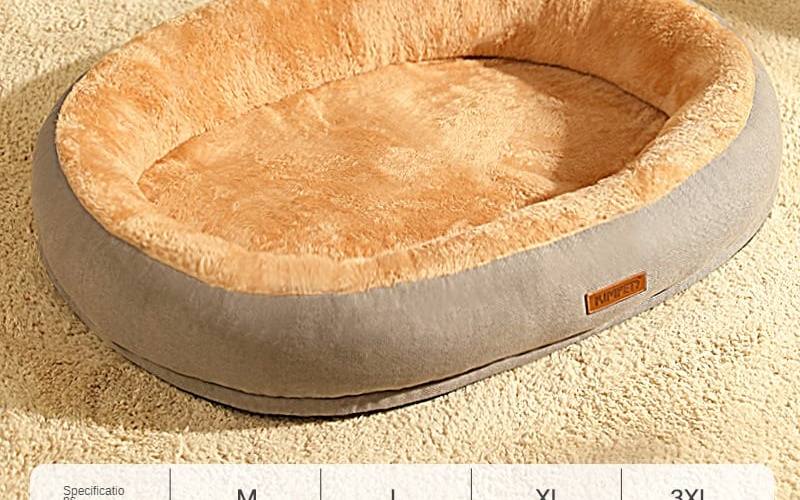
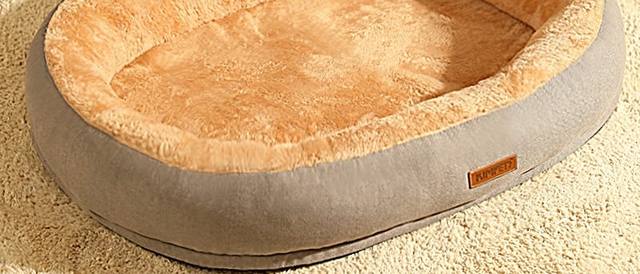
If there is no label, treat the bed gently: a cool or warm gentle cycle for the cover, and hand washing for any foam. Our plush oval beds are a good example. The base opens with a zip, the foam insert comes out, and the cover can then be washed on a gentle cycle.
Step 1: get the hair off
Do this first and do it thoroughly. Hair left on the bed goes into the washing machine, clogs the filter and sticks to everything else in the drum.
- Shake it outside, away from the door, so the loose hair and grit do not come back in.
- Vacuum it with the upholstery tool, working into the seams and under the rim.
- Use a damp rubber glove: wipe it over the plush in one direction and the hair rolls up into clumps you can pick off. A lint roller does the same on smooth fabric.
On a bed with long plush, like ours, brush the pile back up with your hand afterwards.
Step 2: take the bed apart
Unzip the cover and take out the foam insert, cushion or loose filling. Close the zips again before washing, so the teeth do not catch on the fabric.
If the insert cannot come out, treat the whole bed as one piece and go to the section on beds that do not fit in the machine.
Step 3: deal with stains and smells
- Mud: let it dry, brush it off, then wash.
- Urine or vomit: blot up as much as you can with kitchen roll, rinse the area with cold water, then wash the whole cover.
- Odour: a cleaner made for pet accidents can help with urine smells. Avoid strong household cleaners and bleach on fabric your dog lies on.
Step 4: wash the cover
Check the label for the temperature, then use the hottest wash it allows, up to 60°C. There are good reasons to go hot when you can:
- The PDSA advises washing bedding at 60°C or hotter to kill fleas and their eggs.
- NHS advice for norovirus is to wash bedding with poo or vomit on it on a 60°C wash.
- An NHS hospital leaflet on house dust mites explains that washing at 60°C or above kills mites, while lower temperatures wash the allergen away for a while but leave the mites alive.
Some plush and fleece covers are labelled for 30 or 40°C. In that case follow the label. Our supplier gives no washing temperature for our oval beds, so we suggest a gentle cycle at 30 or 40°C.
A few habits make a big difference:
- Use a gentle cycle for plush and fleece, and a normal cycle for sturdy canvas covers.
- Do not overfill the drum. A large cover needs room to move or it comes out still dirty in the middle.
- Use a non-biological detergent. The PDSA recommends non-biological washing powder for pet bedding, rinsed well, so your pet does not react to the washing products.
- Add an extra rinse if your machine has one, so no detergent stays in the fabric.
- Wash dog bedding on its own, not with your own clothes and towels.
Clean the machine filter afterwards. You will be surprised by what is in it.
Step 5: clean the foam insert
Foam is the part people forget, and the part that holds smells. Unless the maker says it is machine washable, wash it by hand:
- Vacuum both sides.
- Spot clean stains with a cloth, warm water and a little mild detergent.
- For a full clean, press it gently in a bath of warm soapy water, then rinse in clean water.
- Squeeze, do not wring. Press the water out with your hands or by rolling it in a towel. Twisting can tear the foam.
Our supplier does not say that the foam insert in our oval beds can go in the machine, so we suggest the hand method above.
Step 6: dry everything completely
A bed that goes back together damp stays damp inside, smells musty within days and is unpleasant to lie on.
- Air dry the cover on a line or an airer, outside on a dry, breezy day if you can.
- Dry foam flat, turning it every few hours, away from direct heat such as a radiator or a fire. It can take a day or more to dry right through.
- Use the tumble dryer only if the label allows it, on a low heat.
- Squeeze the foam before you put it back. If it feels cool or damp in the middle, give it longer.
Plan the wash for a morning, so the bed is dry by bedtime, and keep a blanket or a spare bed for the night if it is not.
Beds that do not fit in the machine
Large beds and beds with sewn-in filling need a different approach:
- Launderette: many have large drums that take a big dog bed.
- The bath: fill it with warm water and mild detergent, tread the bed in it like grapes, drain, then rinse twice.
- The garden: on a dry day, hose it down, scrub with a soft brush and leave it to drain on its side.
Whatever you do, the drying rule is the same: completely dry before your dog uses it again.
Fleas, mites and allergies
A dog bed is where fleas build up. The RSPCA says 95 per cent of flea eggs, larvae and pupae live in the environment, not on your pet, so treating the dog alone is not enough. The PDSA's advice is to wash bedding at 60°C or hotter, vacuum regularly, especially around your pet's bedding and under furniture, and treat the home as well as the pet.
House dust mites are the other reason to keep beds clean. The PDSA lists house dust mites among the triggers of atopic dermatitis, a skin allergy, in dogs. A UK study published in Veterinary Dermatology in 2005 found mites in 22 per cent of dust samples taken from dogs and their beds. If your dog has itchy skin, ask your vet whether its bedding could play a part.
Between washes
- Vacuum the bed and the floor around it once a week.
- Put a washable blanket or throw on top; it takes most of the hair and is easy to wash.
- Wipe your dog's paws after muddy walks.
- Keep your dog's flea and worm treatment up to date.
Choosing a bed that is easy to wash
If you are buying a new bed, look for a removable cover with a zip, a foam insert or filling that comes out, a fabric that tolerates the machine, and a size that fits your washing machine drum once the insert is out. Our 60 x 45 cm oval bed suits cats and small dogs up to about 7.5 kg, and the 75 x 55 cm size suits dogs up to about 15 kg. Both have a zipped base and a foam insert that comes out before washing.
Frequently asked questions
How often should I wash my dog's bed?
There is no official schedule. For a bed your dog uses every day, once a week is a good routine, with a quick vacuum in between. Wash it at once after an accident or illness, and during a flea problem follow the PDSA's advice to wash bedding at the highest temperature possible as often as you can.
Can I put a dog bed in the washing machine?
Most covers can go in the machine if the care label allows it. Take any foam insert out first, close the zips and use a gentle cycle. Wash the insert by hand unless the maker says it is machine washable.
What temperature should I wash a dog bed at?
Follow the care label first. Where the label allows it, use 60°C: the PDSA advises washing bedding at 60°C or hotter to kill fleas and their eggs. If the cover is labelled for 30 or 40°C, wash it at that temperature to keep it in shape, and talk to your vet about flea treatment for the home.
How do I get dog hair off a bed before washing it?
Shake it outside, vacuum it with an upholstery tool, then go over the plush with a damp rubber glove or a lint roller. Hair left on the bed clogs the washing machine filter and sticks to the rest of the wash.